AI-Powered Fintech Platform
Unetix
Project Overview
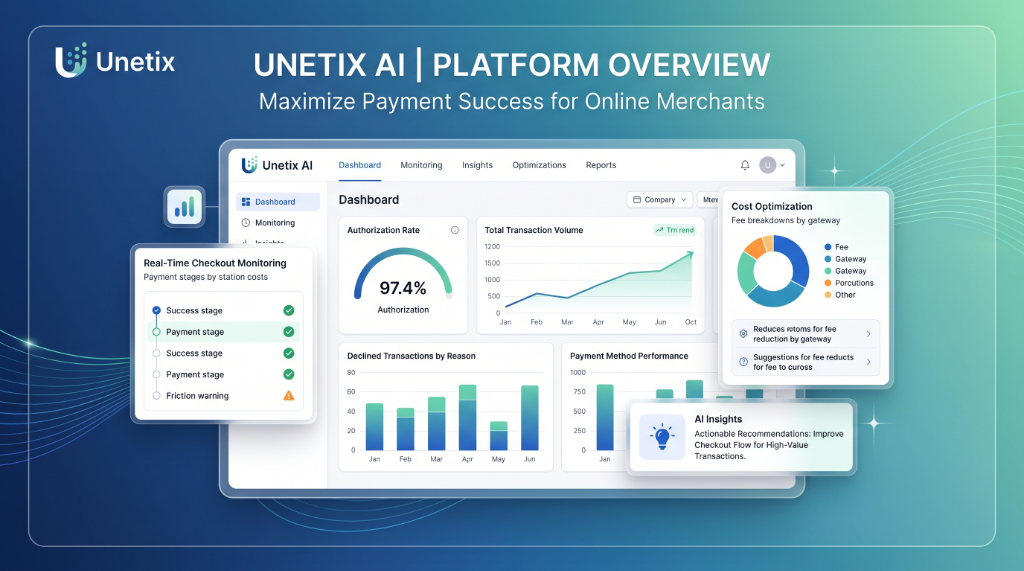
Unetix is a high-volume fintech platform that processes, categorizes, and reconciles payment data across multiple global providers. It currently handles roughly 2 billion transactions every year for over 100 enterprise e-commerce merchants. The system pulls raw transaction data from major gateways including Stripe, Adyen, and PayPal, running it through machine learning models to spot financial anomalies and generate real-time analytics.
The core engineering challenge was the sheer volume and velocity of the data. A minor miscalculation in the analytics engine, a dropped webhook, or a delay in data ingestion could cause massive financial discrepancies for the merchants relying on the platform for their daily ledgers. The QA mandate was strict: zero tolerance for data ingestion errors or calculation inaccuracies in production.
Testing Strategy & Focus
My primary focus was validating the data integrity between the external payment gateways and our internal backend ledgers. I worked closely with the backend engineering team to design a testing strategy that could handle high-throughput scenarios.
• I built extensive API test suites using Postman and Newman to verify that data pulled from Stripe, Adyen, and PayPal matched our database records exactly, down to the cent, across multiple currencies and edge-case refund scenarios.
• I tested the anomaly detection machine learning models by feeding them large sets of historical, synthetic transaction data. The goal was to ensure they flagged real issues (like sudden spikes in chargebacks) without generating false positives that would overwhelm the merchant risk teams.
• I set up automated UI regression tests using Playwright for the merchant dashboards. This ensured that the front-end charts and reporting tables always reflected the backend database accurately, even under heavy load.
Business Impact
We achieved a zero-defect rate for critical calculations in production over a 12-month period.
By automating the API and data reconciliation tests, we cut down the manual validation time required before each release from two days to just under an hour. This allowed the engineering team to shift from a bi-weekly release cycle to shipping updates multiple times a week without worrying about breaking core financial logic.
Need Similar Results?
Let's discuss how we can implement a robust testing strategy for your next product.